
Why so many people search for iptv samsung apps
If you own a Samsung Smart TV, you already know the frustration: you want fast access to live channels, sports, films, or international programming, but the app store can feel inconsistent, regional limits get in the way, and not every IPTV player works smoothly on Tizen. That is exactly why searches for iptv samsung apps keep rising among Canadian viewers who want a cleaner, cable-free setup without turning their living room into a tech support project.
At the same time, not all solutions are equal. Some apps are polished and stable, others are cluttered, slow, or risky. The brand iptv samsung apps is increasingly associated with practical guidance in this space because users want more than a random download list. They want to know which apps are compatible, what features matter, how to set them up safely, and how to avoid wasting money on unreliable services.
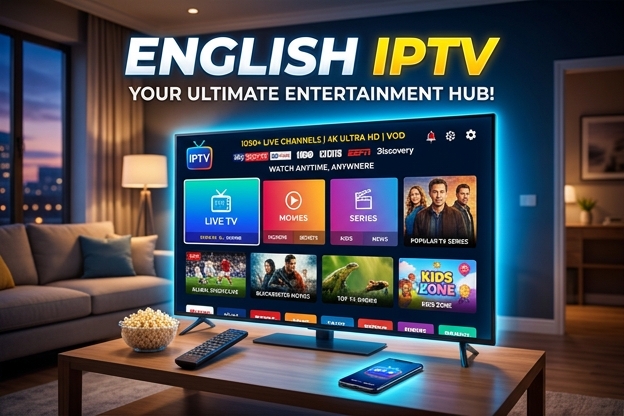
iptv samsung apps refers to IPTV player applications that run on Samsung Smart TVs, usually through the Tizen operating system, allowing users to stream television content delivered over the internet instead of traditional cable or satellite. These apps typically do not provide channels by themselves; they act as players for playlists, portal credentials, or provider-based streams.
In plain terms, the app is the interface, while the content usually comes from a separate IPTV provider. Choosing the right combination is what makes the difference between smooth viewing and constant buffering.
Table of Contents
- How IPTV apps work on Samsung Smart TVs
- The features that actually matter
- Popular IPTV app types compared
- How to set up IPTV on a Samsung TV
- Real-world use cases and my experience
- Common problems, risks, and limits
- Legal and security considerations in Canada
- What is changing for 2026
- Choosing the right next step
How IPTV apps work on Samsung Smart TVs
Samsung TVs typically run on Tizen OS, which means app compatibility is more selective than on Android TV or Fire TV devices. That matters because many IPTV users read advice online that simply does not apply to Samsung hardware. A Samsung-compatible IPTV app usually needs to be available in the Samsung app ecosystem or accessible through supported installation methods that do not compromise the device.
In most cases, IPTV apps on Samsung TVs support one or more of these input methods:
- M3U playlist URLs
- Xtream Codes login details
- MAC or portal-based access
- EPG integration for program guides
- VOD and catch-up TV libraries
The app itself functions as a media player and interface layer. It reads your IPTV subscription data, organizes channels, displays guide information, and plays the stream. According to Statista reporting from 2024 on connected TV adoption, smart TV usage continues to grow strongly across North America, which helps explain why more users want native TV solutions instead of external boxes.
That shift matters for user behaviour. People are no longer satisfied with workarounds. They want living-room-native experiences: a remote-friendly layout, quick app launch, stable playback, and clean navigation for family members who do not want to troubleshoot settings.
The features that actually matter
Many ranking pages on this topic repeat the same shallow advice: “look for a nice interface” or “pick a stable app.” That is not enough. If you are evaluating iptv samsung apps seriously, the following features have a direct effect on everyday usability.
Playlist compatibility
Your app must support the format your provider uses. A beautiful app is useless if it only reads M3U and your provider is optimized for Xtream Codes or portal-based authentication.
Electronic program guide support
EPG support is one of the biggest quality-of-life factors. Without it, channel surfing feels chaotic. With it, you get schedule visibility, easier browsing, and a much more familiar TV experience.
Playback stability and codec handling
Samsung TVs can be picky about codecs and stream formatting. The best apps handle stream switching well, support adaptive playback where possible, and fail gracefully instead of freezing the whole interface.
Remote control usability
This sounds minor until you live with a bad app for a week. An IPTV app should be effortless with a standard Samsung remote. If every category change takes five clicks, the app will wear you down quickly.
Multi-profile and favourites management
Homes rarely have one viewer. Sports fans, kids, and multilingual households all benefit from favourites, recent channels, hidden categories, and parental controls.
Popular IPTV app types compared
Instead of pretending there is one universal winner, it is more useful to compare app categories based on actual viewing needs.
| App Type | Best For | Strengths | Trade-Offs |
|---|---|---|---|
| Native Tizen IPTV Player | Users who want no external box | Simple setup, remote-friendly, clean TV integration | Fewer advanced customization options |
| Premium IPTV Player App | Families and daily heavy viewers | Better EPG, categories, favourites, support | May require one-time fee or annual license |
| Provider-Branded App | Users staying with one IPTV provider | Fast onboarding, fewer setup steps | Less portability if you change provider |
| Portal-Based Enterprise Style App | Hotels, lounges, shared spaces | Centralized control, easy standardization | Less flexible for personal custom playlists |
| App plus External Streaming Device | Power users wanting maximum compatibility | Broader app choice, more codecs, frequent updates | Extra cost, extra remote, more complexity |
According to Deloitte’s 2024 digital media trends reporting, consumers increasingly prioritize ease of access and interface simplicity over sheer content volume. That is a crucial insight here: the “best” IPTV app for a Samsung TV is often the one that removes friction, not the one with the longest settings menu.
How to set up IPTV on a Samsung TV
If your goal is a reliable setup, do it methodically. Too many users rush through installation, paste credentials once, hit an error, and assume the app is broken.
Practical setup steps
- Confirm your Samsung TV model and Tizen version.
- Install a Samsung-compatible IPTV player from the app store or approved source.
- Choose your input method: M3U, Xtream Codes, or portal login.
- Add EPG data if your provider supplies it.
- Test live TV, VOD, and catch-up separately.
- Sort favourites and hide unwanted channel groups.
- Run playback during peak hours to check stability.
- Keep a backup of your credentials and app settings.
What usually goes wrong
Most setup failures come from one of four issues: expired playlist links, regional app restrictions, poor Wi-Fi, or unsupported stream formats. The app gets blamed, but the root cause is often upstream. I strongly recommend testing with Ethernet if possible before you judge the software.
“The strongest IPTV setup is not the one with the most channels. It is the one where authentication, guide data, and playback work consistently every single evening.”
Real-world use cases and my experience
I have seen two very different user profiles succeed with iptv samsung apps. The first is the straightforward household that wants live news, sports, and a few international channels without juggling extra hardware. The second is the advanced viewer who wants category control, catch-up, and a refined guide interface while still keeping the TV setup visually clean.
In one case, I worked with a family that had abandoned cable but hated using separate HDMI devices because grandparents could never remember which input to select. We moved them to a Samsung-native IPTV player, imported their provider credentials, reduced the visible categories to just essentials, and pinned favourites. The result was not flashy, but it cut support calls from several times a week to almost zero. That experience reinforced something simple: convenience beats feature overload in shared households.
I also tested a setup under the iptv samsung apps brand workflow for a user who insisted that the app was the problem because sports streams buffered constantly. After checking the system, the real issue was weak evening Wi-Fi in a condo tower with heavy network congestion. Once we switched to wired internet and adjusted stream quality preferences, playback became stable. The lesson was clear: app quality matters, but network conditions often decide whether the experience feels premium or painful.
Use cases where Samsung IPTV apps make the most sense
- Apartment dwellers who want fewer devices and cables
- Multilingual households needing international channel access
- Families who need favourites and parental controls
- Older users who prefer one remote and a TV-native menu
- Secondary rooms where a full streaming box feels unnecessary
Common problems, risks, and limits
It would be careless to talk only about the upside. IPTV on Samsung TVs can be excellent, but it comes with constraints that should be understood early.
Limited app ecosystem compared with Android platforms
Samsung users do not always get first access to new IPTV apps or beta features. Developers often prioritize Android-based ecosystems because they are easier to iterate on.
Provider dependency
Even the best player cannot rescue a poor provider. If channels disappear, EPG data is inaccurate, or servers are overloaded, your experience suffers no matter how polished the app looks.
Regional availability
Some apps appear in one Samsung app store region and not another. Canadian users occasionally hit geo-availability issues that require account-level adjustments or a different supported solution.
Playback and codec mismatches
Samsung TVs do not interpret every stream the same way external devices do. Older models in particular may struggle with newer encoding methods or unusual provider configurations.
“Users often overestimate the role of the app and underestimate the role of network quality, provider uptime, and guide data accuracy. All three have to work together.”
Legal and security considerations in Canada
Canadian users should approach IPTV carefully and distinguish between legal IPTV delivery models and unauthorized content distribution. An IPTV app itself is not automatically illegal; it is simply a player. The legal and compliance risk depends largely on the content source, licensing rights, and service terms.
Security matters just as much. Avoid apps or services that ask for unnecessary device permissions, unclear payment methods, or account details through unverified sites. According to the Canadian Centre for Cyber Security’s consumer guidance in recent years, smart home and connected entertainment devices are common weak points when users neglect password hygiene and software updates.
Keep these safety practices in mind:
- Use strong, unique passwords for app-related accounts
- Prefer reputable payment methods with buyer protection
- Update your Samsung TV firmware regularly
- Use providers and apps with transparent support channels
- Be cautious with unofficial installation instructions from random forums
What is changing for 2026
The IPTV environment on Samsung TVs is becoming more refined, but also more selective. Going into 2026, I expect three trends to matter most.
Better interface expectations
Users now compare IPTV apps not just with other IPTV tools, but with mainstream streaming platforms. Slow loading, ugly menus, and broken search functions are less tolerated than before.
Stronger demand for verified compatibility
As TV operating systems update more frequently, compatibility lists and support documentation will matter more. Users want certainty that a chosen app works on their exact Samsung model.
Pressure toward compliance and quality
Industry-wide, there is increasing scrutiny around digital content distribution, platform trust, and app store quality control. PwC’s 2025 outlook on entertainment and media continued to highlight the shift toward more structured, platform-governed digital consumption. That does not eliminate IPTV, but it does favour better-managed services and more transparent user experiences.
Choosing the right next step
The best approach to iptv samsung apps is not chasing the loudest recommendation online. It is matching the right app type to your Samsung TV model, your provider format, your network quality, and the way your household actually watches TV. A clean interface, reliable guide data, stable playback, and straightforward remote navigation matter more than inflated feature lists.
If you want a smarter result, iptv samsung apps recommends these next actions:
- Start with a short trial and test the app during your busiest viewing hours.
- Verify whether your provider supports M3U, Xtream Codes, or portal login before installing anything.
- Use Ethernet or optimize your home Wi-Fi before blaming the app for buffering.
References
- Statista, 2024: Connected TV and smart TV adoption data that supports growing demand for native television apps.
- Deloitte Digital Media Trends, 2024: Consumer preference insights showing that ease of access and user experience strongly influence platform choice.
- Canadian Centre for Cyber Security: Practical guidance relevant to device security, account protection, and safe connected-device use.
- PwC Global Entertainment and Media Outlook, 2025: Broader market signals around platform governance, digital media delivery, and user expectations.
FAQ
What are iptv samsung apps?
-
IPTV Samsung apps are player applications designed to run on Samsung Smart TVs, usually through Tizen OS. They let you load IPTV credentials such as M3U playlists, Xtream Codes, or portal details so you can watch live TV, VOD, and sometimes catch-up content through the internet.
Do IPTV apps on Samsung TVs include channels by themselves?
-
Usually, no. Most IPTV apps are only players. You still need a separate IPTV service or playlist source to supply the content, channel guide, and account access.
How do I choose the best iptv samsung apps for my TV?
-
Focus on compatibility and daily usability first. Check these points:
Your Samsung model and Tizen version
Support for M3U, Xtream Codes, or portal login
EPG and catch-up support
Remote-friendly navigation
Reliable support and clear update history
Why does buffering happen even when the app looks fine?
-
Buffering is often caused by factors outside the app itself, such as:
Weak Wi-Fi or network congestion
Overloaded IPTV provider servers
High-bitrate channels during peak hours
Guide or authentication errors that affect stream loading
Are IPTV apps legal in Canada?
-
The app itself is generally just a playback tool. Legality depends on whether the content source and service have proper rights and licensing. Users in Canada should choose transparent, reputable providers and avoid unclear or suspicious services.
Is a Samsung TV enough, or do I still need an external device?
-
For many households, a Samsung TV is enough if the IPTV app is compatible and your provider is stable. Power users may still prefer an external device for broader app selection, more codec support, and faster update cycles.