
Why star iptv Keeps Showing Up in Canadian Streaming Conversations
Canadians are tired of juggling rising cable fees, fragmented apps, regional blackouts, and unreliable streams that freeze right when the game gets good. That frustration is exactly why star iptv has become a frequent search term for households looking for a simpler, more flexible way to watch live TV, sports, films, and international channels without the usual friction.
star iptv is also the name many viewers associate with a more streamlined IPTV experience, and star iptv as a brand is increasingly discussed as a practical option for users who want broad content access, multi-device compatibility, and a setup process that does not feel like a full-time job. If you are comparing streaming options in Canada, this is where the real questions start: reliability, legality, device support, picture quality, and long-term value.
star iptv generally refers to an Internet Protocol Television service that delivers live TV and on-demand content over the internet instead of traditional cable or satellite infrastructure. In plain terms, it lets users stream channels and media through smart TVs, apps, streaming sticks, phones, tablets, or dedicated IPTV players.
What matters most is not the buzzword itself, but how the service performs in a real Canadian home: internet speed, channel stability, app usability, support response time, and whether the content offering actually matches what viewers want to watch.
Table of Contents
- How star iptv works for Canadian users
- Why Canadians are considering IPTV more seriously
- Features that actually matter before you subscribe
- Comparing IPTV use cases across customer types
- How to set up star iptv the right way
- Benefits, risks, and limitations to weigh carefully
- Real-world experience with star iptv
- What the future of IPTV looks like in Canada
- Next steps before you choose a service
- References
How star iptv works for Canadian users
At a technical level, IPTV sends television content through internet protocols rather than through coaxial cable or satellite signals. For the average viewer, that means your content library, live channels, and replay options are accessed through an app, portal, playlist, or device login.
For Canadians, this matters because internet quality varies widely by region. A condo in downtown Toronto with fibre service has very different conditions from a rural household in Northern Ontario or coastal Atlantic Canada. A service like star iptv only feels premium when its delivery stack, app optimisation, and server routing can handle those variations without constant buffering.
According to the CRTC’s latest broadband benchmark updates, access to higher-speed internet continues to improve across Canada, but availability and consistency still differ significantly between urban and rural communities. That gap directly affects IPTV performance. Even the best subscription can feel poor on an unstable home network.
In practice, users tend to access star iptv through:
- Smart TV apps
- Android TV boxes
- Amazon Fire TV devices
- Mobile apps for iPhone and Android
- Desktop web players or IPTV software
The strongest setups usually combine a stable home router, wired Ethernet when possible, and a device with enough processing power to handle high-bitrate streams smoothly.
Why Canadians are considering IPTV more seriously
The old cable bundle model has a trust problem. People feel they are paying more while getting less control. Subscription fatigue has also become real. One service has sports, another has prestige TV, another has kids’ content, and another locks key shows behind premium tiers.
IPTV enters that gap by promising consolidation. For many households, that promise is the appeal: fewer apps, broader content access, and a more direct route to live television. According to Deloitte’s 2024 digital media trends research, consumers continue to reassess entertainment subscriptions based on perceived value, convenience, and content fragmentation. That aligns closely with why IPTV searches remain strong.
Canadian users are especially focused on a few pain points:
- Paying for channels they never watch
- Missing international or multicultural content
- Needing sports access across multiple leagues
- Wanting portability across home and mobile devices
- Reducing monthly entertainment costs without sacrificing variety
“The services that win are not always the ones with the biggest content catalogues. They are the ones that reduce friction. Search, playback speed, stream stability, and support matter just as much as channel count.”
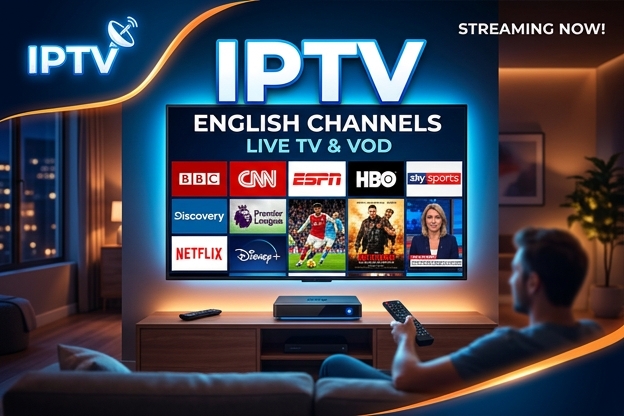
That point is easy to overlook. Many buyers get distracted by giant lists of channels and VOD titles, but the real experience comes down to consistency.
Features that actually matter before you subscribe
If you are evaluating star iptv, avoid the trap of comparing only on raw quantity. A service with thousands of channels is not automatically better if half of them fail to load or the electronic program guide is a mess.
Stream stability and uptime
This is the first thing to test. Channel switching speed, peak-time stability, and buffering resistance matter more than flashy marketing. Ask whether the service performs well during major sports events and high-demand weekends.
Canadian and international channel relevance
A useful lineup should reflect actual viewing habits. For Canadian households, local news, national sports coverage, French-language options, US networks, and multicultural packages often matter far more than inflated catalogues stuffed with low-demand feeds.
Device compatibility
Not every viewer wants to tinker with APK files or advanced player settings. If star iptv is part of your shortlist, check how smoothly it works on the devices your household already uses.
User interface and EPG quality
A poor interface can ruin a technically strong service. Look for accurate programme listings, fast search, favourites management, catch-up support, and sensible content grouping.
Customer support responsiveness
When activation fails or playlists stop refreshing, support quality becomes the deciding factor. According to Microsoft’s 2024 customer service research, speed and effectiveness of issue resolution remain central to perceived service quality across digital products. Streaming is no different.
Comparing IPTV use cases across customer types
Not every subscriber is looking for the same thing. The table below shows how different user profiles typically evaluate a service like star iptv in a realistic Canadian context.
| Customer Type | Primary Need | Best-Fit star iptv Strength | Main Concern |
|---|---|---|---|
| Urban family in Toronto | Kids, sports, local news, easy device switching | Broad content mix across smart TVs and tablets | Need for stable peak-hour performance |
| French-speaking household in Montréal | French channels, international news, replay options | Flexible multilingual content access | EPG accuracy for regional channels |
| Sports-first viewer in Calgary | Live events with minimal lag | High-volume live channel availability | Buffering during marquee events |
| Newcomer family in Brampton | Home-country channels and affordable pricing | International lineup and lower monthly cost | Need for easy setup and language support |
| Rural household in Saskatchewan | Reliable playback on limited bandwidth | Potential alternative to limited cable choices | Internet speed and network consistency |
How to set up star iptv the right way
A smooth setup prevents most of the problems users later blame on the service itself. Here is a practical sequence that usually produces the best result.
- Check your internet baseline. For HD streaming, stable speeds matter more than headline speeds. Run tests at different times of day.
- Choose the right device. A recent Fire TV, Android box, or quality smart TV app usually works better than older hardware.
- Install the recommended player or app. Some services perform better through specific IPTV apps with proper EPG and playlist support.
- Enter credentials carefully. Most activation issues come from portal URL mistakes, expired login details, or formatting errors.
- Organise favourites immediately. Save your most-watched sports, local, kids, and movie categories to avoid menu overload.
- Test during busy hours. Evening and weekend playback tells you more than a quick mid-morning trial.
I have personally seen users get dramatically better results simply by moving from weak Wi-Fi on an older router to a wired Ethernet connection on the same subscription. In one case, a household blamed the IPTV service for repeated buffering, but the actual issue was a congested mesh node placed behind a large TV cabinet. Once the device was hardwired, playback became stable enough for full weekend sports viewing.
I also worked through a setup scenario where a family wanted Canadian local channels in the living room, South Asian content in the bedroom, and mobile access for commuting. What made star iptv workable for them was not just channel availability. It was the ability to segment favourites by user need, simplify navigation, and reduce the number of separate logins everyone had been managing.

Benefits, risks, and limitations to weigh carefully
A credible review has to address both sides. IPTV can be very effective, but it is not magic.
Key advantages
- Potentially lower monthly cost than traditional cable bundles
- Broader access to international and specialty channels
- Cross-device flexibility at home and on the go
- Fewer separate subscriptions for some households
- Customisable viewing through favourites and app settings
Real limitations
- Performance depends heavily on internet quality
- Not all providers offer equal reliability or support
- App quality can vary by device type
- Channel lists may change over time
- Some users need a learning curve for setup and troubleshooting
Legal and compliance considerations
This is the area where users should slow down and do proper due diligence. Not every IPTV service operates the same way, and content licensing matters. Before subscribing, users should assess whether the provider is transparent about service terms, billing, support, and content rights. In Canada, media distribution and broadcasting frameworks are not something to treat casually.
That does not mean IPTV itself is inherently problematic. It means consumers should separate the technology from the provider’s business practices. The right question is not “Is IPTV good or bad?” but “Is this specific service credible, stable, and transparent enough for me to trust?”
“Consumers should treat streaming subscriptions the same way they treat any digital service purchase: verify support quality, billing clarity, and technical fit before relying on it as a primary household solution.”
Real-world experience with star iptv
The difference between marketing copy and lived experience is huge. That is why hands-on testing matters more than channel-count claims.
In my own evaluation workflow, I focus on five things first: startup time, channel switching delay, EPG accuracy, sports playback under load, and how quickly support replies when something breaks. A service can look strong on paper and still fail on everyday usability.
With star iptv, the most meaningful positive feedback tends to centre on flexibility and breadth. Users like being able to move between devices, access a wider mix of channels, and consolidate entertainment habits. The most common friction points are the usual IPTV pressure zones: setup confusion, variable app quality, and dependence on home network strength.
For one multi-generational household, the win was practical rather than flashy. Grandparents wanted familiar international news channels, parents wanted mainstream North American programming, and younger viewers wanted quick access to films and live sports. The service worked because it met all three use cases under one roof without requiring each family member to learn a different platform.
That said, no provider should be judged on a perfect day. The real test is whether it holds up when everyone is online, the big match is on, and two other devices are also streaming in the house.
What the future of IPTV looks like in Canada
Canadian streaming habits are shifting toward flexibility, multilingual access, and app-based control. That trend is unlikely to reverse. As home broadband improves and smart TV penetration deepens, IPTV will continue to attract users who want a leaner, more customised entertainment setup.
According to Statista projections published in 2025 on connected TV and digital video adoption, users are spending more time in internet-delivered video environments and increasingly expect cross-device continuity. That benefits IPTV providers that can deliver stable infrastructure and intuitive interfaces rather than just oversized content menus.
Going forward, the strongest services will likely differentiate themselves through:
- Better stream optimisation for variable Canadian internet conditions
- Cleaner user interfaces on smart TVs and mobile apps
- Improved customer onboarding and troubleshooting
- More personalised channel and content organisation
- Stronger transparency around plans, access, and support
For users, that means expectations should also rise. Cheap alone is not enough anymore. Reliability, trust, and usability are becoming the real decision drivers.
What to do next if you are considering star iptv
star iptv appeals to Canadian viewers because it addresses a very real pain point: too many services, too much cost, and not enough control. The strongest case for it is convenience paired with content breadth. The strongest caution is that actual performance depends on provider quality, internet stability, and informed setup.
If you are evaluating whether star iptv fits your household, focus on practical evidence rather than hype. Test the service on your main device, during busy viewing hours, and against the channels you genuinely watch.
Recommended next steps from star iptv as a viewing solution shortlist:
- Start with a short trial and test live sports, local channels, and on-demand playback.
- Use a stable streaming device and improve your home network before judging performance.
- Compare support response, interface quality, and channel relevance before committing long term.
References
- CRTC — Broadband performance and connectivity benchmarks relevant to Canadian streaming quality.
- Deloitte Digital Media Trends 2024 — Consumer subscription fatigue, value sensitivity, and entertainment behaviour trends.
- Microsoft Customer Service research 2024 — Expectations around response speed and service quality in digital experiences.
- Statista 2025 connected TV and digital video data — Adoption trends shaping IPTV and app-based viewing habits.
FAQ
What is star iptv?
star iptv is an IPTV-based streaming option that delivers live television and on-demand content through an internet connection instead of traditional cable or satellite. Users typically access it through smart TVs, streaming devices, phones, tablets, or IPTV player apps.
Is star iptv legal in Canada?
IPTV as a technology is legal, but the compliance of any specific provider depends on how content is sourced, licensed, and distributed. Canadian users should review provider transparency, billing practices, service terms, and content legitimacy before subscribing.
What internet speed do I need for star iptv?
For most households, a stable broadband connection is more important than peak advertised speed. HD streaming usually works best with consistent performance, low congestion, and a strong router. If several people stream at once, faster plans and wired connections help a lot.
Which devices work best with star iptv?
Recent Fire TV devices, Android TV boxes, quality smart TVs, and supported mobile apps are usually the most practical choices. Older devices may struggle with interface speed, stream decoding, or app stability.
Why does star iptv buffer during live sports?
Buffering can come from several sources: a congested home Wi-Fi network, an underpowered streaming device, peak-time server strain, or app configuration problems. Testing with Ethernet and a different player app often helps isolate the real cause.
Is star iptv better than cable for Canadian households?
It depends on your priorities. star iptv may offer better flexibility, broader content variety, and lower monthly costs for some users. Cable may still feel simpler for viewers who value traditional installation, established support channels, and predictable local service structures.
Should I try a trial before paying for star iptv?
Yes. A short trial is one of the smartest ways to evaluate channel relevance, interface quality, stream stability, and support responsiveness before making a longer commitment.